1 / 6
+1
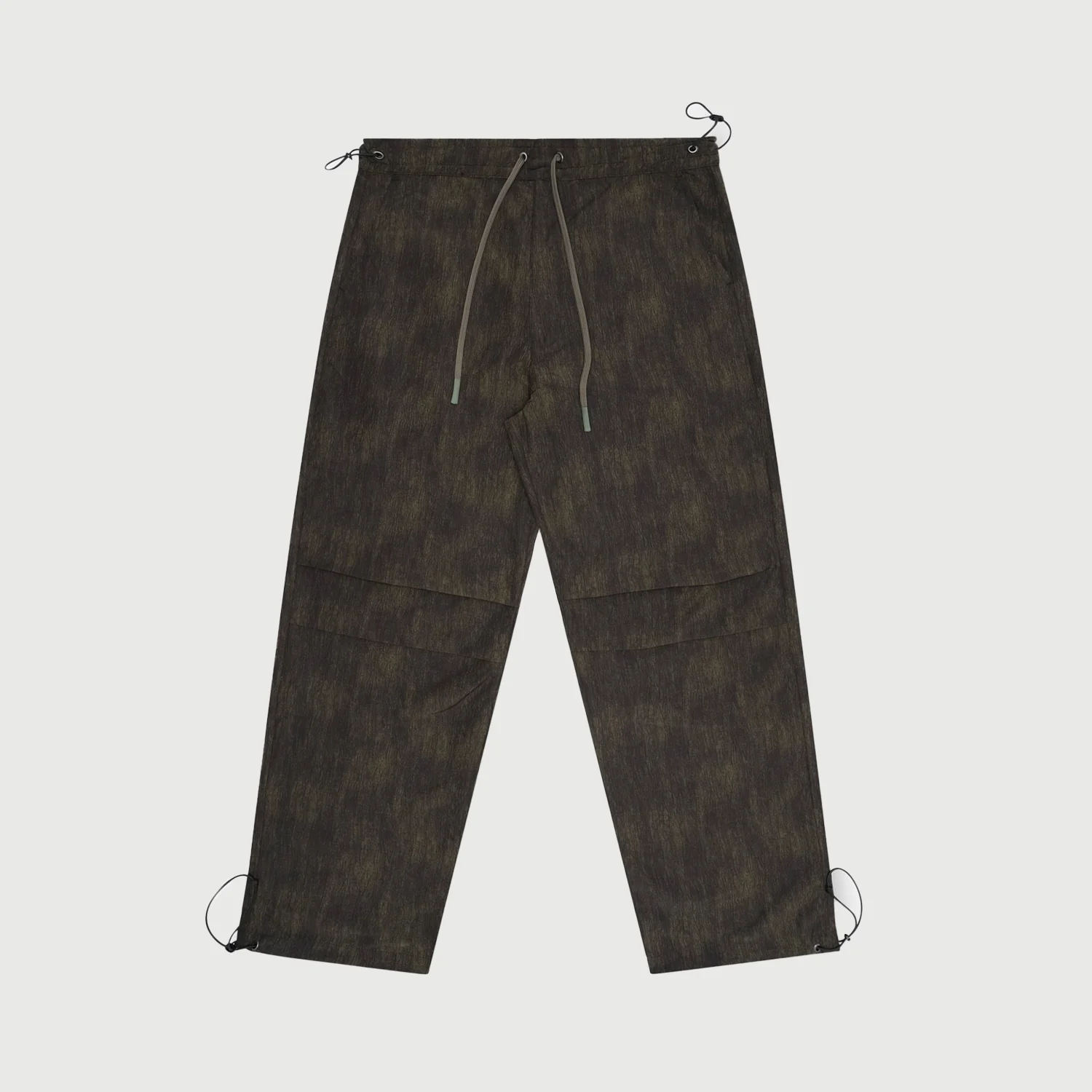
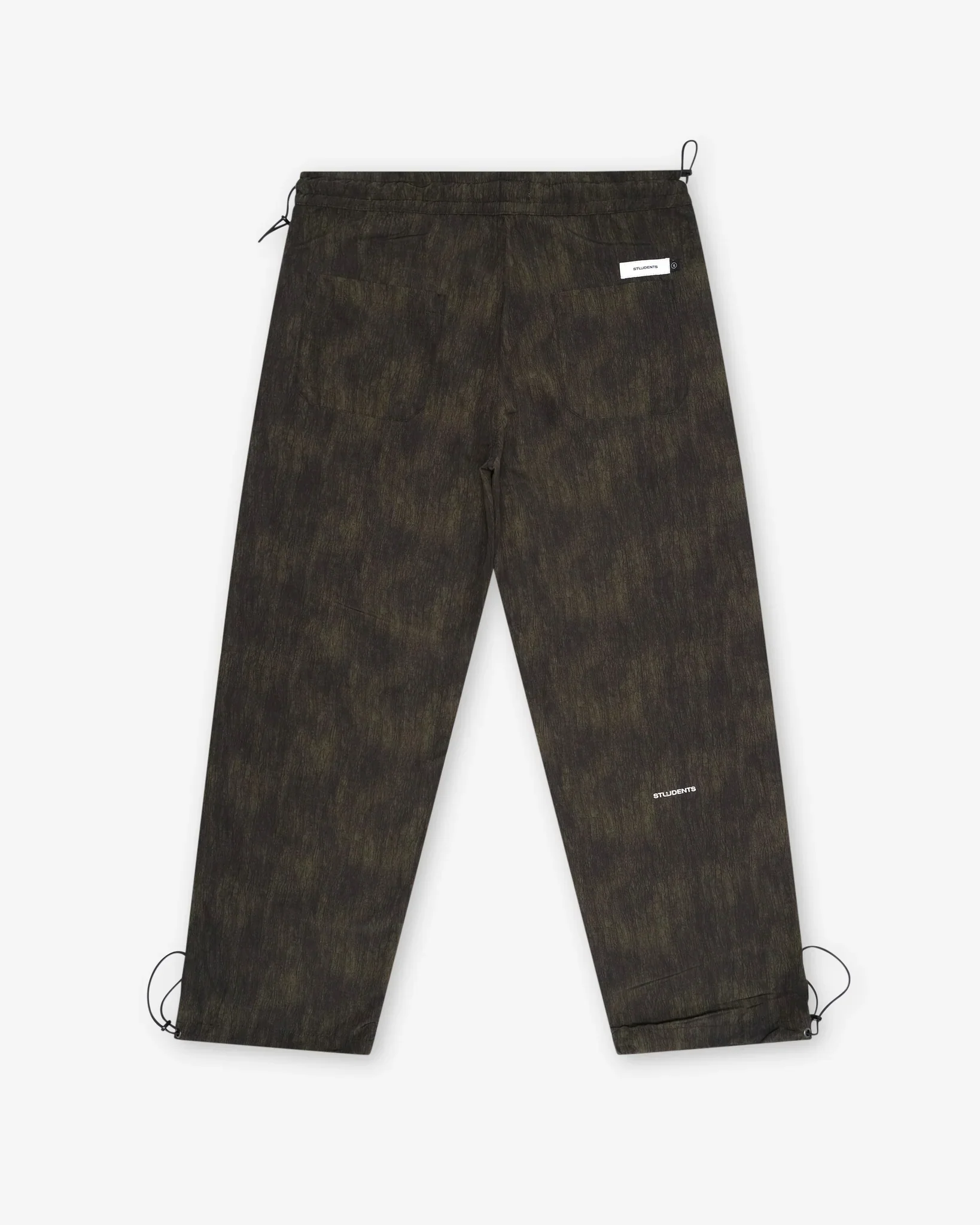
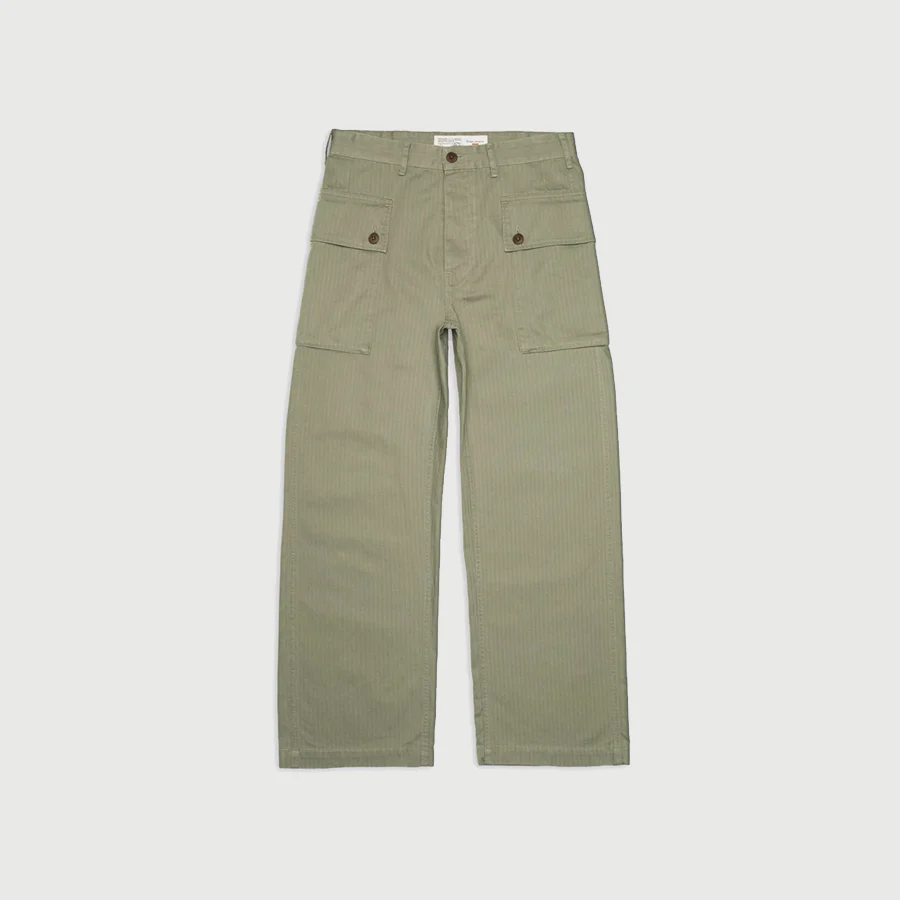
Nudie Denim Loud Larry Pants - 'Pale Green'
DETAILS
- Organic Cotton
- Rigid herringbone twill
- Matching thread at seams
- Corozo buttons
- Button fly
- Two pockets
- Woven patch
- Loose fit
- High waist
- Wide leg
- Wide leg opening
Made in Tunisia
100% Cotton
Certifications
Description
The Loud Larry pants feature a loose fit, wide leg, and comfortable high waist, staying true to the essence of authentic workwear. They are crafted from exquisite herringbone twill fabric. Its tightly woven construction gives it a slightly crisp texture, a dry feel, and a smooth appearance. The fabric pattern pays homage to vintage herringbone twills, and to ensure longevity and desirable aging property, we have piece-dyed it in a perfect sage green shade. The pants have undergone a gentle wash, subtly accentuating the fabric's characteristics and garment construction.
The two spacious side cargo pockets are inspired by the P-44 utility trousers, also known as ""Monkey Pants.""
Curious to learn more about herringbone twill? We're delighted you asked! Herringbone twill is a variation of the regular twill weaving pattern. While regular twill, as seen in denim, exhibits a distinct diagonal pattern, herringbone twill features broken diagonal lines, creating a noticeable zig-zag pattern (more prominent than in a broken twill). The zig-zag pattern, resembling the bone structure of a herring, is compact yet distinctive. Herringbone twill is commonly found in vintage workwear jackets, particularly those of French and German origin, often in blue or grey hues. Moreover, it is well-known for its usage in vintage military fatigues, commonly referred to by its acronym HBT. The choice of herringbone twill in workwear and military garments can, to our knowledge, be attributed to two primary reasons. Firstly, the alteration of the twill direction enhances tear resistance. Secondly, during a time when sanforization and skewing processes were not yet developed, herringbone twill exhibited a reduced tendency to skew compared to regular twill. This aspect, similar to the purpose behind the development of broken twill, contributed to its popularity. There you have it, the ins and outs of herringbone twill.
The two spacious side cargo pockets are inspired by the P-44 utility trousers, also known as ""Monkey Pants.""
Curious to learn more about herringbone twill? We're delighted you asked! Herringbone twill is a variation of the regular twill weaving pattern. While regular twill, as seen in denim, exhibits a distinct diagonal pattern, herringbone twill features broken diagonal lines, creating a noticeable zig-zag pattern (more prominent than in a broken twill). The zig-zag pattern, resembling the bone structure of a herring, is compact yet distinctive. Herringbone twill is commonly found in vintage workwear jackets, particularly those of French and German origin, often in blue or grey hues. Moreover, it is well-known for its usage in vintage military fatigues, commonly referred to by its acronym HBT. The choice of herringbone twill in workwear and military garments can, to our knowledge, be attributed to two primary reasons. Firstly, the alteration of the twill direction enhances tear resistance. Secondly, during a time when sanforization and skewing processes were not yet developed, herringbone twill exhibited a reduced tendency to skew compared to regular twill. This aspect, similar to the purpose behind the development of broken twill, contributed to its popularity. There you have it, the ins and outs of herringbone twill.
DETAILS
- Organic Cotton
- Rigid herringbone twill
- Matching thread at seams
- Corozo buttons
- Button fly
- Two pockets
- Woven patch
- Loose fit
- High waist
- Wide leg
- Wide leg opening
Made in Tunisia
100% Cotton
Certifications
Description
The Loud Larry pants feature a loose fit, wide leg, and comfortable high waist, staying true to the essence of authentic workwear. They are crafted from exquisite herringbone twill fabric. Its tightly woven construction gives it a slightly crisp texture, a dry feel, and a smooth appearance. The fabric pattern pays homage to vintage herringbone twills, and to ensure longevity and desirable aging property, we have piece-dyed it in a perfect sage green shade. The pants have undergone a gentle wash, subtly accentuating the fabric's characteristics and garment construction.
The two spacious side cargo pockets are inspired by the P-44 utility trousers, also known as ""Monkey Pants.""
Curious to learn more about herringbone twill? We're delighted you asked! Herringbone twill is a variation of the regular twill weaving pattern. While regular twill, as seen in denim, exhibits a distinct diagonal pattern, herringbone twill features broken diagonal lines, creating a noticeable zig-zag pattern (more prominent than in a broken twill). The zig-zag pattern, resembling the bone structure of a herring, is compact yet distinctive. Herringbone twill is commonly found in vintage workwear jackets, particularly those of French and German origin, often in blue or grey hues. Moreover, it is well-known for its usage in vintage military fatigues, commonly referred to by its acronym HBT. The choice of herringbone twill in workwear and military garments can, to our knowledge, be attributed to two primary reasons. Firstly, the alteration of the twill direction enhances tear resistance. Secondly, during a time when sanforization and skewing processes were not yet developed, herringbone twill exhibited a reduced tendency to skew compared to regular twill. This aspect, similar to the purpose behind the development of broken twill, contributed to its popularity. There you have it, the ins and outs of herringbone twill.
The two spacious side cargo pockets are inspired by the P-44 utility trousers, also known as ""Monkey Pants.""
Curious to learn more about herringbone twill? We're delighted you asked! Herringbone twill is a variation of the regular twill weaving pattern. While regular twill, as seen in denim, exhibits a distinct diagonal pattern, herringbone twill features broken diagonal lines, creating a noticeable zig-zag pattern (more prominent than in a broken twill). The zig-zag pattern, resembling the bone structure of a herring, is compact yet distinctive. Herringbone twill is commonly found in vintage workwear jackets, particularly those of French and German origin, often in blue or grey hues. Moreover, it is well-known for its usage in vintage military fatigues, commonly referred to by its acronym HBT. The choice of herringbone twill in workwear and military garments can, to our knowledge, be attributed to two primary reasons. Firstly, the alteration of the twill direction enhances tear resistance. Secondly, during a time when sanforization and skewing processes were not yet developed, herringbone twill exhibited a reduced tendency to skew compared to regular twill. This aspect, similar to the purpose behind the development of broken twill, contributed to its popularity. There you have it, the ins and outs of herringbone twill.
Select Size
From $77.00
Original: $220.00
-65%Nudie Denim Loud Larry Pants - 'Pale Green'—
$220.00
$77.00Description
DETAILS
- Organic Cotton
- Rigid herringbone twill
- Matching thread at seams
- Corozo buttons
- Button fly
- Two pockets
- Woven patch
- Loose fit
- High waist
- Wide leg
- Wide leg opening
Made in Tunisia
100% Cotton
Certifications
Description
The Loud Larry pants feature a loose fit, wide leg, and comfortable high waist, staying true to the essence of authentic workwear. They are crafted from exquisite herringbone twill fabric. Its tightly woven construction gives it a slightly crisp texture, a dry feel, and a smooth appearance. The fabric pattern pays homage to vintage herringbone twills, and to ensure longevity and desirable aging property, we have piece-dyed it in a perfect sage green shade. The pants have undergone a gentle wash, subtly accentuating the fabric's characteristics and garment construction.
The two spacious side cargo pockets are inspired by the P-44 utility trousers, also known as ""Monkey Pants.""
Curious to learn more about herringbone twill? We're delighted you asked! Herringbone twill is a variation of the regular twill weaving pattern. While regular twill, as seen in denim, exhibits a distinct diagonal pattern, herringbone twill features broken diagonal lines, creating a noticeable zig-zag pattern (more prominent than in a broken twill). The zig-zag pattern, resembling the bone structure of a herring, is compact yet distinctive. Herringbone twill is commonly found in vintage workwear jackets, particularly those of French and German origin, often in blue or grey hues. Moreover, it is well-known for its usage in vintage military fatigues, commonly referred to by its acronym HBT. The choice of herringbone twill in workwear and military garments can, to our knowledge, be attributed to two primary reasons. Firstly, the alteration of the twill direction enhances tear resistance. Secondly, during a time when sanforization and skewing processes were not yet developed, herringbone twill exhibited a reduced tendency to skew compared to regular twill. This aspect, similar to the purpose behind the development of broken twill, contributed to its popularity. There you have it, the ins and outs of herringbone twill.
The two spacious side cargo pockets are inspired by the P-44 utility trousers, also known as ""Monkey Pants.""
Curious to learn more about herringbone twill? We're delighted you asked! Herringbone twill is a variation of the regular twill weaving pattern. While regular twill, as seen in denim, exhibits a distinct diagonal pattern, herringbone twill features broken diagonal lines, creating a noticeable zig-zag pattern (more prominent than in a broken twill). The zig-zag pattern, resembling the bone structure of a herring, is compact yet distinctive. Herringbone twill is commonly found in vintage workwear jackets, particularly those of French and German origin, often in blue or grey hues. Moreover, it is well-known for its usage in vintage military fatigues, commonly referred to by its acronym HBT. The choice of herringbone twill in workwear and military garments can, to our knowledge, be attributed to two primary reasons. Firstly, the alteration of the twill direction enhances tear resistance. Secondly, during a time when sanforization and skewing processes were not yet developed, herringbone twill exhibited a reduced tendency to skew compared to regular twill. This aspect, similar to the purpose behind the development of broken twill, contributed to its popularity. There you have it, the ins and outs of herringbone twill.